
A lecture
Gender and the Body
How has the idea of the perfect body, and of gender, been reshaped across the history of art?
Future dates
There are no future public dates scheduled at the moment.
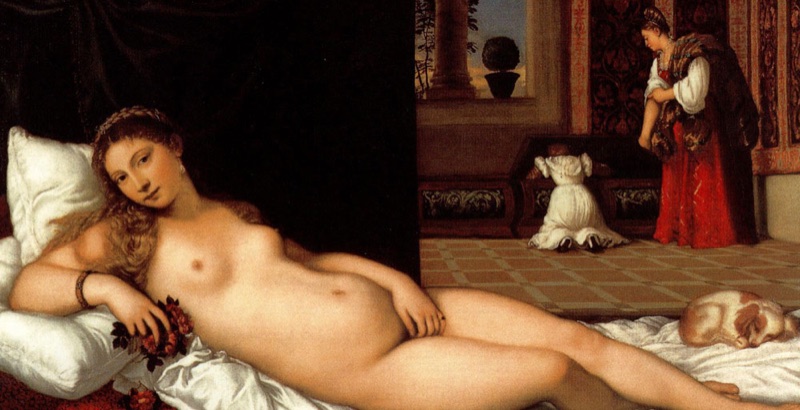
The nude has long been seen as the pinnacle of artistic perfection, yet throughout the history of art the idea of the perfect body, and with it gender, has been constantly reshaped and redefined.
This lecture looks at the continuing fascination with the body in sculpture and painting, from sculpture of the 4th century BC through Renaissance painting to the Impressionists. Along the way it takes in works by Botticelli, Raphael, Titian, Bernini, Degas, Renoir and Velázquez, among others.
It also asks why these images were commissioned. What were they for, who were the patrons behind them, and what riddles, signs and symbols are hidden in these seemingly flawless images of perfection?
As it charts changing attitudes to the nude, the lecture looks at how collectors and museums treated nudes in the 19th century, and at the many approaches to a subject that has become synonymous with the idea of art itself. Finally it asks: if this is art, how did it become so, and why?
Short reading list
- Clark, Kenneth, The Nude: A Study of Ideal Art (John Murray, 1956)
- Eire, Carlos M. N., War against the Idols: The Reformation of Worship from Erasmus to Calvin (Cambridge University Press, 1986)
- Sutherland Harris, Ann, Seventeenth-Century Art & Architecture (Laurence King, 2008)
Topics
- The nude
- Gender
- Sculpture and painting
For
- General audiences
Private bookings
Available for private bookings.